

Anyue Eureka lemon.
Grown in the county that produces about 70 % of China's lemons. Pre-cooled, graded and packed to order, moved at 10–13 °C.
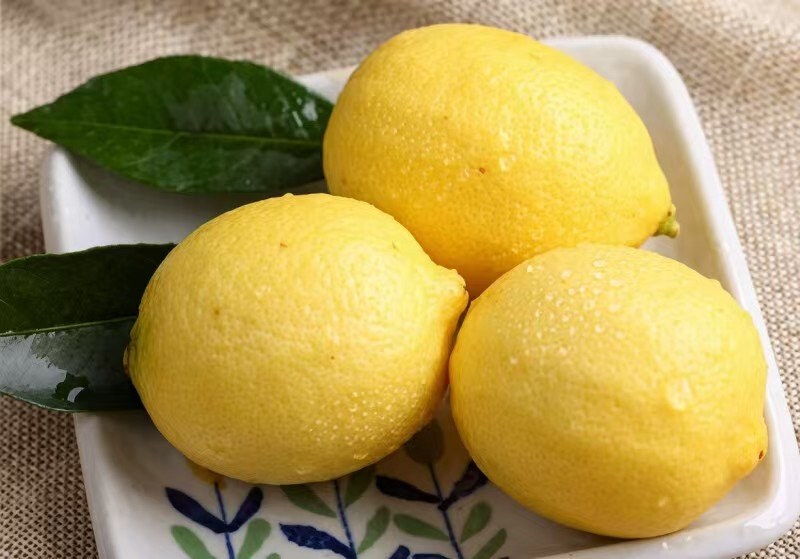
Where it grows.
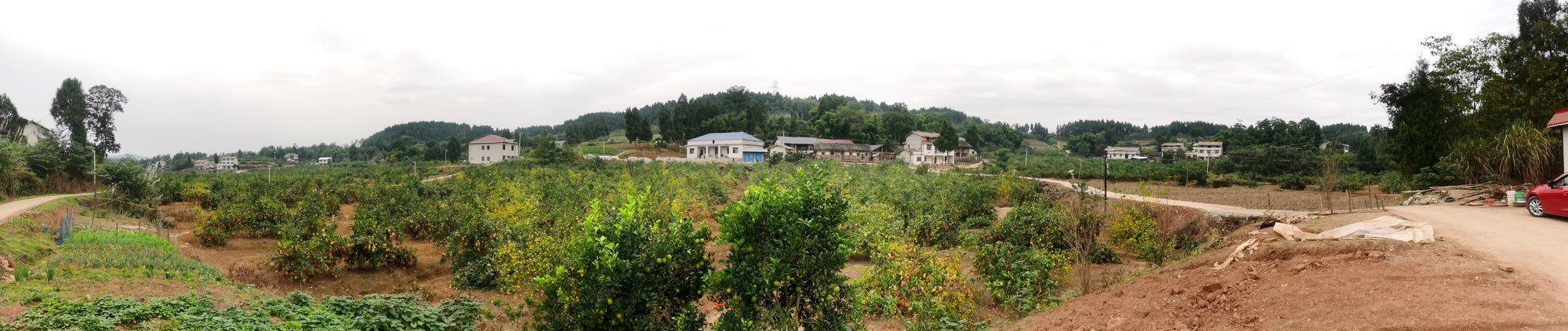
Anyue sits in the middle of the Sichuan Basin, between 30°07′ and 30°23′ north — the band the lemon likes. Winters are mild, summers are not extreme, and there are about 327 frost-free days a year.
Most of the orchards grow on purple shale soil, high in iron, zinc and boron and free-draining, which is why the fruit carries both colour and acidity. The county holds China's geographical indication for lemon and is listed under the EU–China agreement on geographical indications.
Lemon arrived here through a seedling: a Canadian missionary planted a Eureka tree in Chengdu in 1926, and in 1929 a student from Anyue carried a cutting home. Ninety years of selection later, 92.7 % of the county's orchards are that one variety.
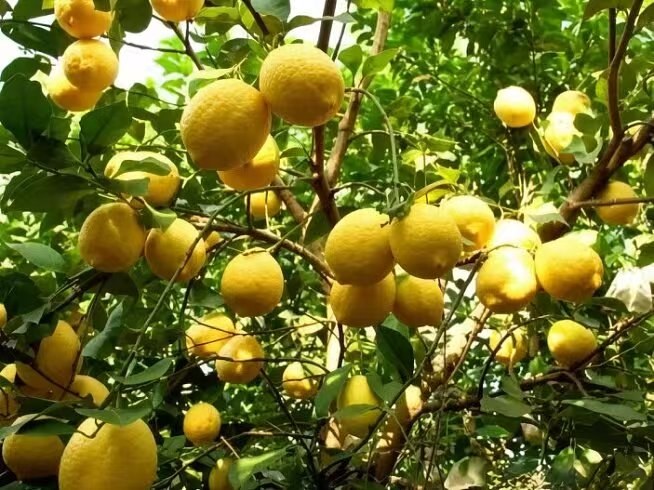
Eureka, and nothing else.
The fruit is oval with the varietal nipple, 130–180 g, high in peel oil and extremely acid — which is what a juice house and an oil press both want.
| Indicator | Anyue Eureka | Why it matters to a buyer |
|---|---|---|
| Peel oil | 7.4 ‰ | Above California and Sicily; cold-pressed oil without a second source |
| Total soluble solids | 9.5 % (9.2–9.8 °Brix) | More body in juice and NFC, less sugar correction |
| Citric acid | 6.7 % (≈ 62.4 g/L) | Sharp, clean acidity; national standard asks for 45 g/L |
| Vitamin C | 58 mg/100 mL | Above the USDA average for Eureka |
| Juice yield | ≈ 38 % | Higher recovery per tonne for juice and NFC lines |
| Pectin | 3 % | Peel and pulp are worth extracting, not discarding |
| Single fruit | 130–180 g | The size range the count grades below are built on |
Four flowerings, year-round supply.
Eureka flowers and fruits through the year in Anyue. Three crops overlap, and cold storage covers the gap, so a twelve-month contract is a schedule rather than a promise.
| Crop | Flowers | Ripe | Share | Ships |
|---|---|---|---|---|
| Spring crop | March – April | September – October | ≈ 80 % | Late September – November |
| Summer crop | June – July | December | 15–20 % | December – January |
| Autumn crop | August – September | February – March | Small | February – May |
| Cold store | — | — | — | May – August |
Fresh fruit peaks from October to January. From May to August we ship from temperature-controlled stores, at the same 10–13 °C, with the temperature log attached.
From the orchard to the reefer
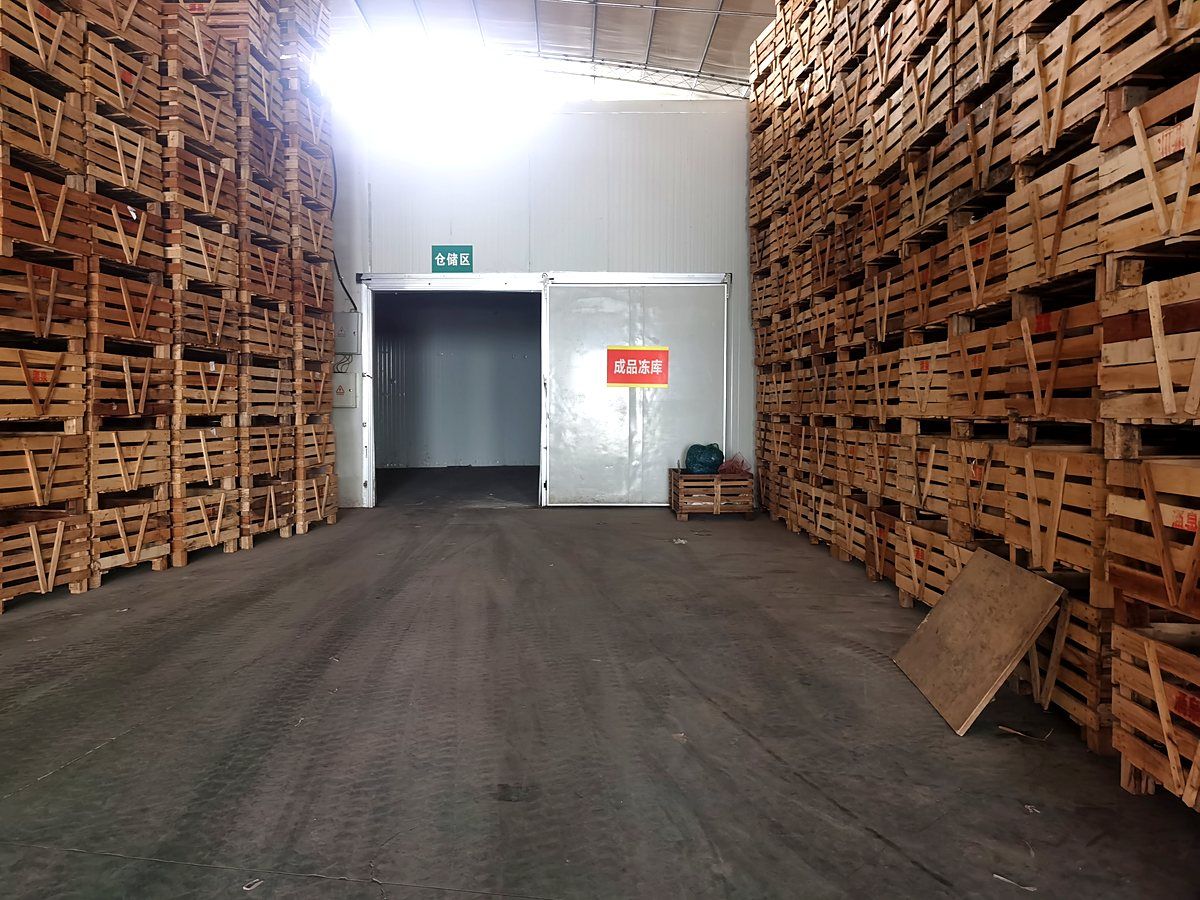
Registered orchards in Anyue. Fruit is picked at colour break and delivered to the packing house for pre-cooling.
Brought down to 10–13 °C before packing. Below 10 °C the fruit takes chilling injury; above 15 °C it ages faster.
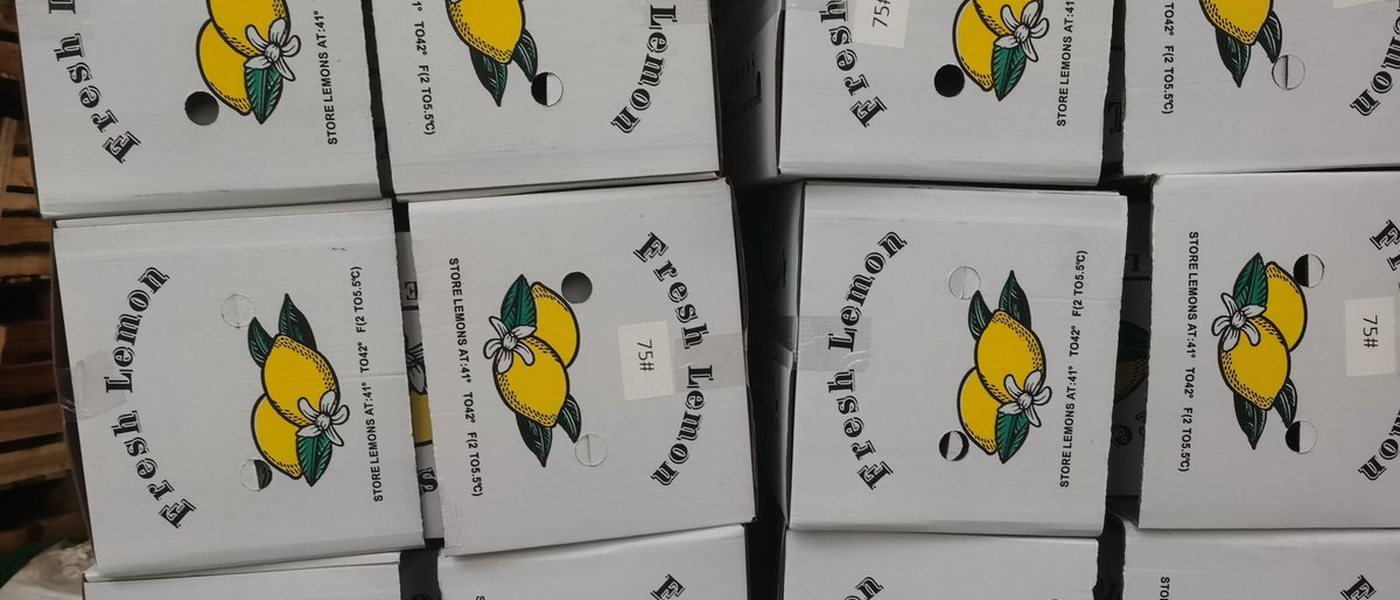
Graded to the buyer's count and packed in a 15 kg standard carton, an 18 kg composite box or a 6–10 kg retail carton, labelled to order.
Loaded at 10–13 °C with vents set for the destination. The temperature log is issued with the shipping documents.
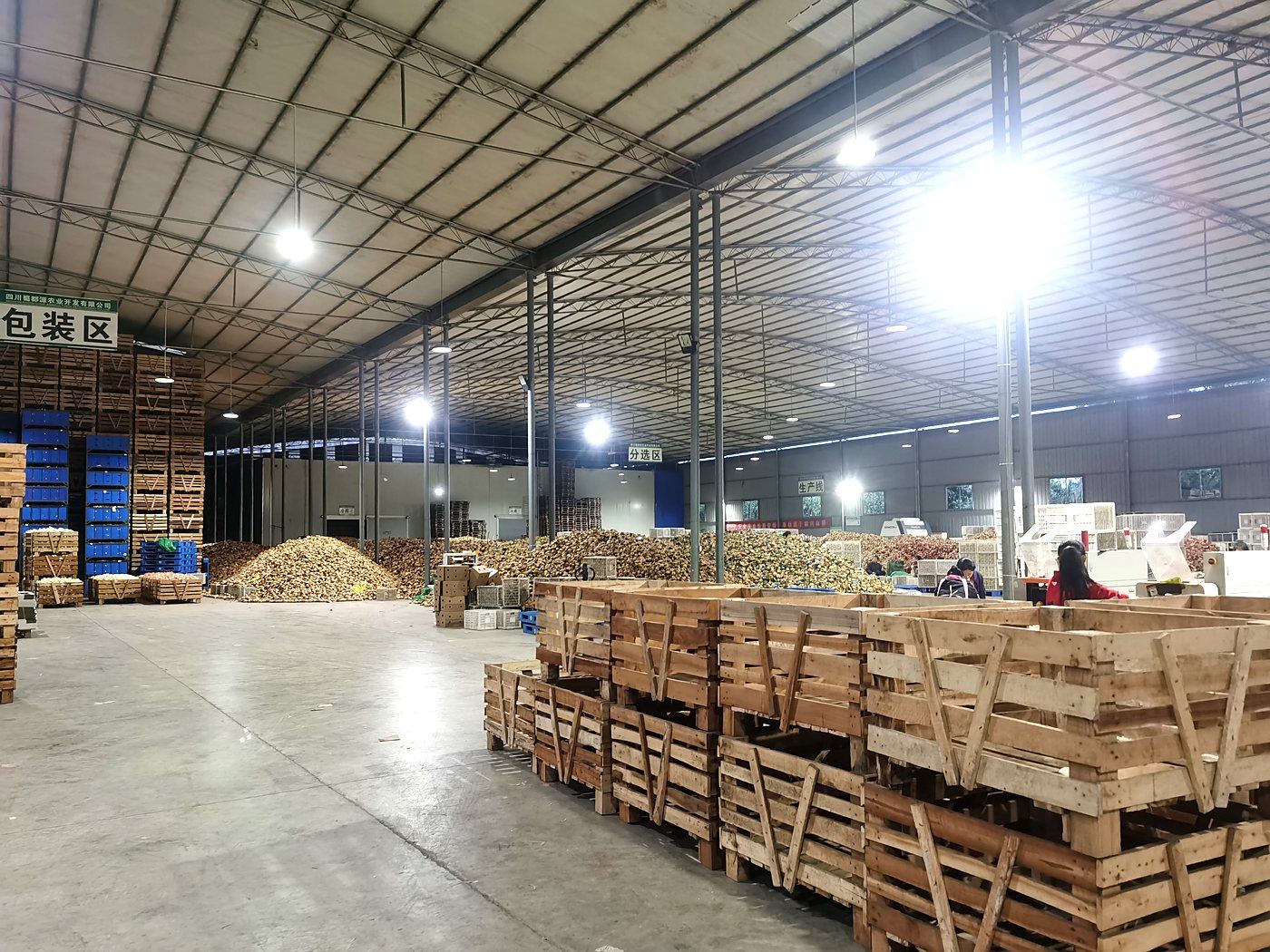
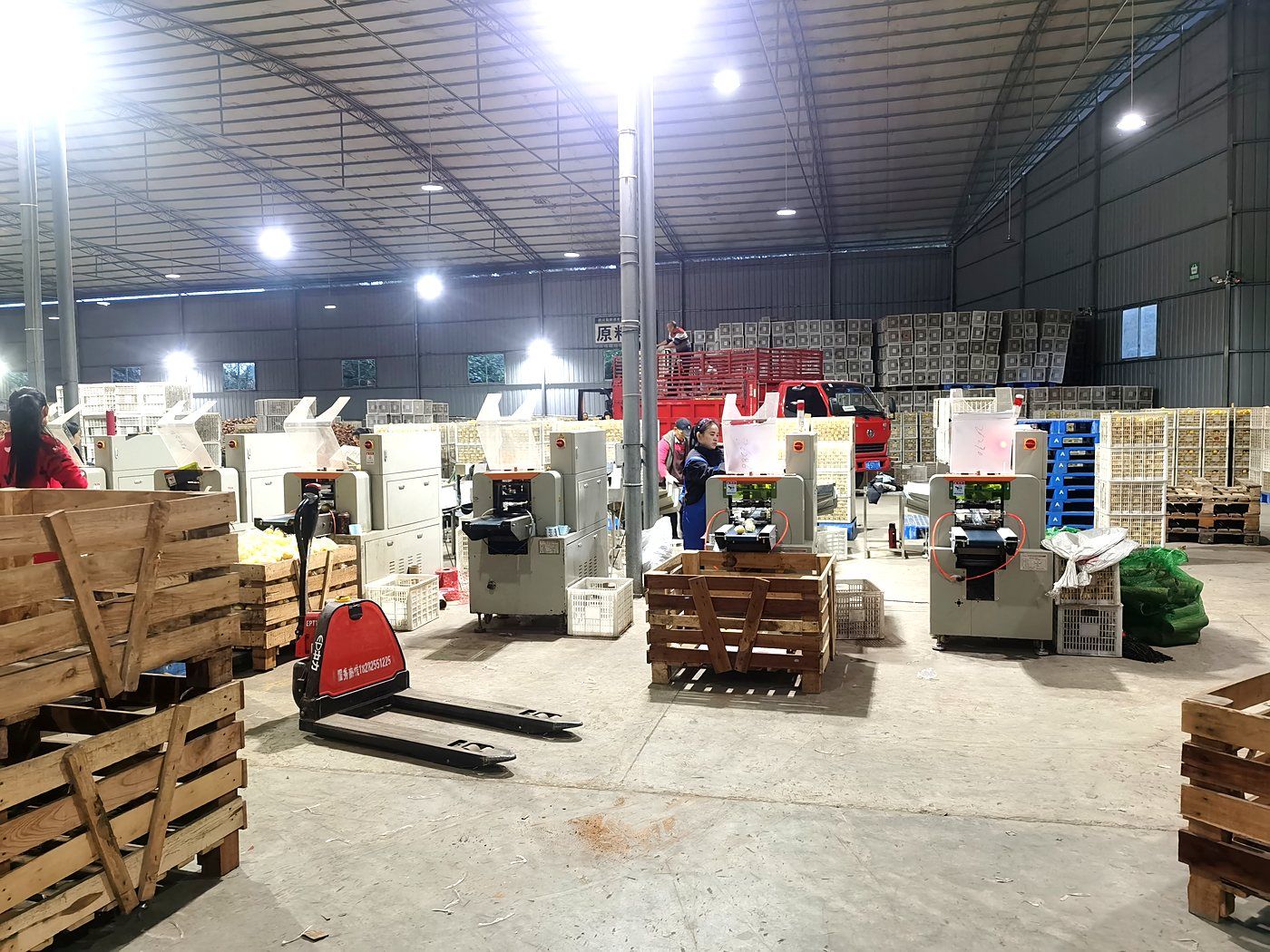
Graded to the count.
Grades are set on the outside — colour, blemish, shape. Sizes are counted per 15 kg pack, from 48# (300 g a fruit) down to 198# (under 62 g).
| Grade | What passes | Where it goes |
|---|---|---|
| Class I | Sound and uniform in colour; blemishes ≤ 1 mm, no more than two spots; no decay, no misshapen fruit | Retail and food service |
| Class II | Slight marks ≤ 1.5 mm, up to four spots on one face; sound fruit | Wholesale and processing |
| Class III | More surface marks, still no decay | Wholesale, juice |
| Processing | Misshapen or blemished, no rot | Juice, peel oil, pectin |
Packing: 15 kg standard carton for Vietnam, Malaysia, Indonesia, the Gulf and Russia; 18 kg composite box for the Philippines, counts 113–150; 6–10 kg carton for Russian retail. 5-ply board with 30–40 mm vents, PE liner, fruit wrap. Marks carry grade, count, net weight, origin, orchard and packhouse registration numbers, lot number — in Russian for Russia, Arabic for Saudi Arabia, never a price.
Download the grading sheet (PDF)
Thirty countries.
Anyue lemon ships to more than thirty countries — Russia, the Philippines, Malaysia, Indonesia, Thailand, Vietnam, the Gulf states and into Central Europe. In 2025 the county's own lemon exports were worth RMB 2.19 billion, up 23.2 % on the year before. The fruit is not the hard part; the file is.
Geographical indication (China and EU) · GLOBAL G.A.P. and ISO 22000 across the county's export chain · orchard and packing-house registration for export
The destination must be open to Chinese citrus, and the fruit must meet its residue and quarantine rules.
Orchards and the packing house are registered for export; the registration number goes on the documents.
Every consignment is inspected and issued a phytosanitary certificate before it is loaded.
Ask for the season plan.
Tell us the destination, the count and the packing, and we will come back with the window and the price.